
How to Reduce Rental Vacancy in Australia: A 2026 Landlord Playbook
Reduce rental vacancy by improving the decisions around price, preparation, listing quality, response time and applicant fit. This practical 2026 playbook helps Australian landlords protect income without cutting corners.

Vacancy is a decision cost, not just an empty calendar
A home can be technically available and still be hard to rent if the price, condition or information creates friction.
Reduce friction before you reduce the rent
Low vacancy markets do not guarantee a fast or good tenancy. Renters still compare total cost, condition, location, inclusions, response time and the confidence they have in the process. Start by finding the reason a suitable applicant is not moving forward, then make the smallest change that addresses it.
- Price: does the home sit in the search range of the renters it suits?
- Readiness: can an applicant inspect and move into a clean, safe, working home?
- Presentation: can someone understand the home from the first listing view?
- Process: can a suitable applicant get a clear answer and complete the next step?
Prepare the property before the listing date
Every day spent fixing avoidable problems after advertising is a day of uncertainty for the owner and the applicant.
Use the changeover period to complete essential repairs, test appliances, clean thoroughly, check access and confirm what will remain at the property. Photograph the home when it is genuinely ready. If work is still planned, state what it is, who is responsible and when the renter can expect it to be complete.

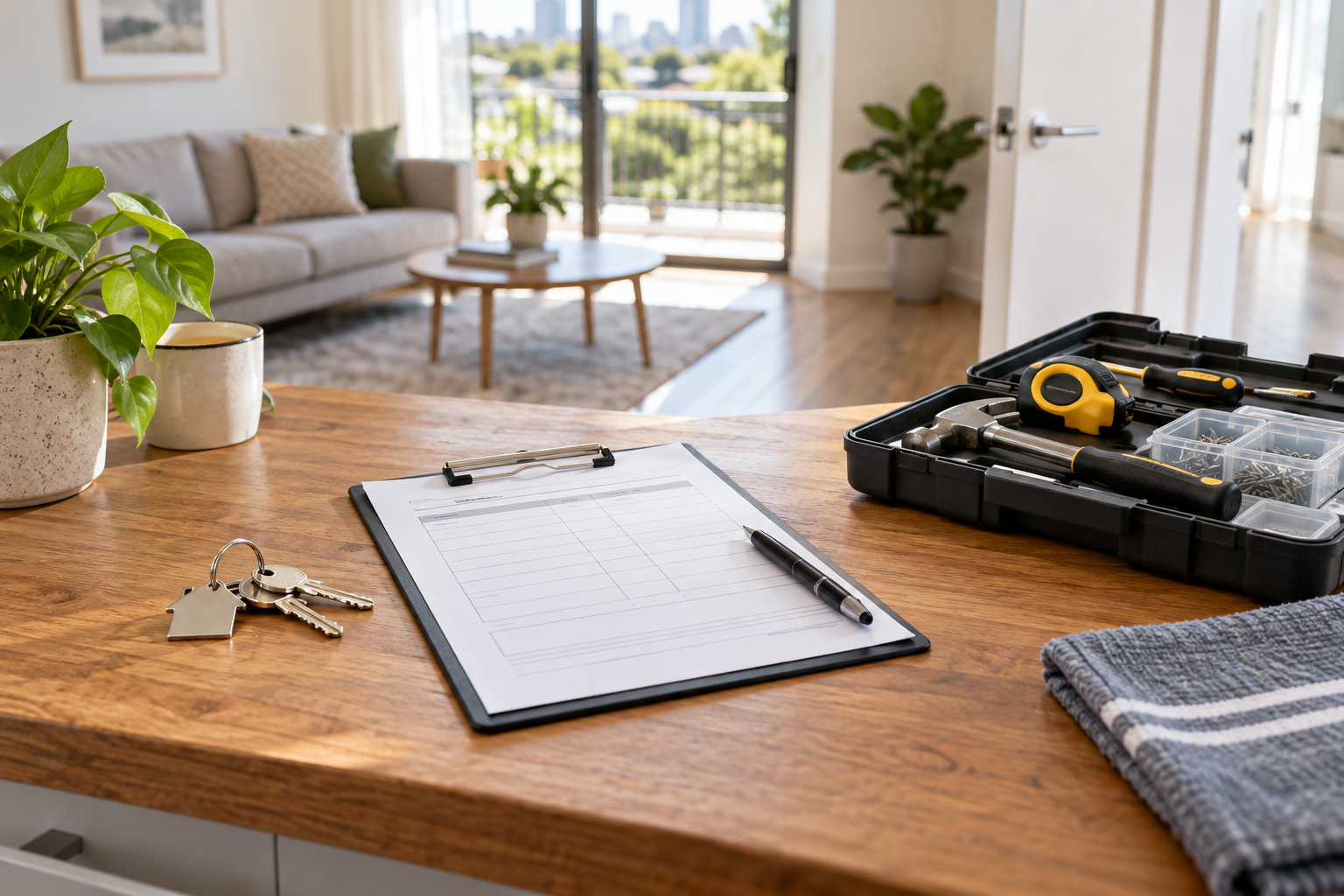
- Complete urgent repairs and confirm the home meets the current local minimum standards.
- Test locks, lights, heating, cooling, appliances, smoke alarms and water fixtures.
- Remove leftover belongings, rubbish and confusing personal items.
- Prepare keys, access instructions and a clear condition-report process.
Price for the right search, not the highest hope
A realistic advertised price can improve enquiry quality and reduce the time spent negotiating after inspection.
Build the price from close comparables, local demand, property features, total renter cost and the cost of an empty week. Avoid chasing one exceptional listing or assuming every renter can absorb the same increase. Record the evidence and check the advertising rules for the property’s state or territory.
Write a listing that answers the next question
Clear information reduces unsuitable inspections and gives suitable renters a reason to continue.
Use a specific title, accurate room counts, a clear weekly rent, available date, lease expectations, inclusions, parking, access, outdoor space and known limitations. Show the layout and the most decision-relevant rooms. Avoid vague claims such as perfect, luxury or must-see unless the description explains what a renter will actually find.


- What is the full weekly cost and what is included?
- What date can the renter actually move in?
- What access, parking, stairs, pets or household conditions matter?
- What happens after inspection and how should applicants ask questions?
Respond quickly and keep the process consistent
A good applicant can disappear while waiting for a basic answer or unclear next step.
Set a response routine for enquiries, inspections, applications and follow-up. Use a consistent set of relevant questions, give applicants the same core information and keep a record of what was requested and when. Speed is useful when it is paired with fairness, privacy and a decision process you can explain.
Fast is not the same as rushed. The best vacancy reduction system makes the next step clear without weakening the quality of the decision.
- Acknowledge the enquiry and answer the practical question first.
- Offer inspection times that match the property’s readiness and local rules.
- Send the application instructions and privacy information clearly.
- Tell applicants the expected decision timeframe and the next contact point.
Use inspection feedback as market evidence
Repeated questions and drop-off points show where the renter experience is breaking down.
After each inspection window, record attendance, questions, objections and what suitable applicants needed to know before deciding. If several people ask about the same cost, repair, access issue or room, improve the listing or resolve the issue. If people love the home but cannot make the numbers work, revisit the price and total cost rather than blaming the application pool.
Review vacancy at the end of every tenancy
The best vacancy playbook gets better when it learns from the last changeover.
Keep the listing, price evidence, dates, inspection notes, application questions, repairs and final outcome together. Review what delayed the last tenancy and change one part of the process before the next listing. Over time, this creates a local, property-specific vacancy record that is more useful than a generic market headline.
Keep property setup, listing decisions and follow-up connected with RentSeekrExplore more landlord guidance
RENTSEEKR CITY · LOCAL DISCOVERY
Looking for useful help in your area?
Choose a published City market and optional suburb or postcode to see active, approved services listed for that area. This article does not determine your location.
Choose a published City market; no location is inferred from this article.