
Rental Inspection Entry Notice in Australia: What Tenants and Landlords Need to Know
How much notice does a landlord need to give before entering a rental? Learn how routine inspections, repairs, open homes, privacy and entry records work across Australia, with a practical state-checking framework.
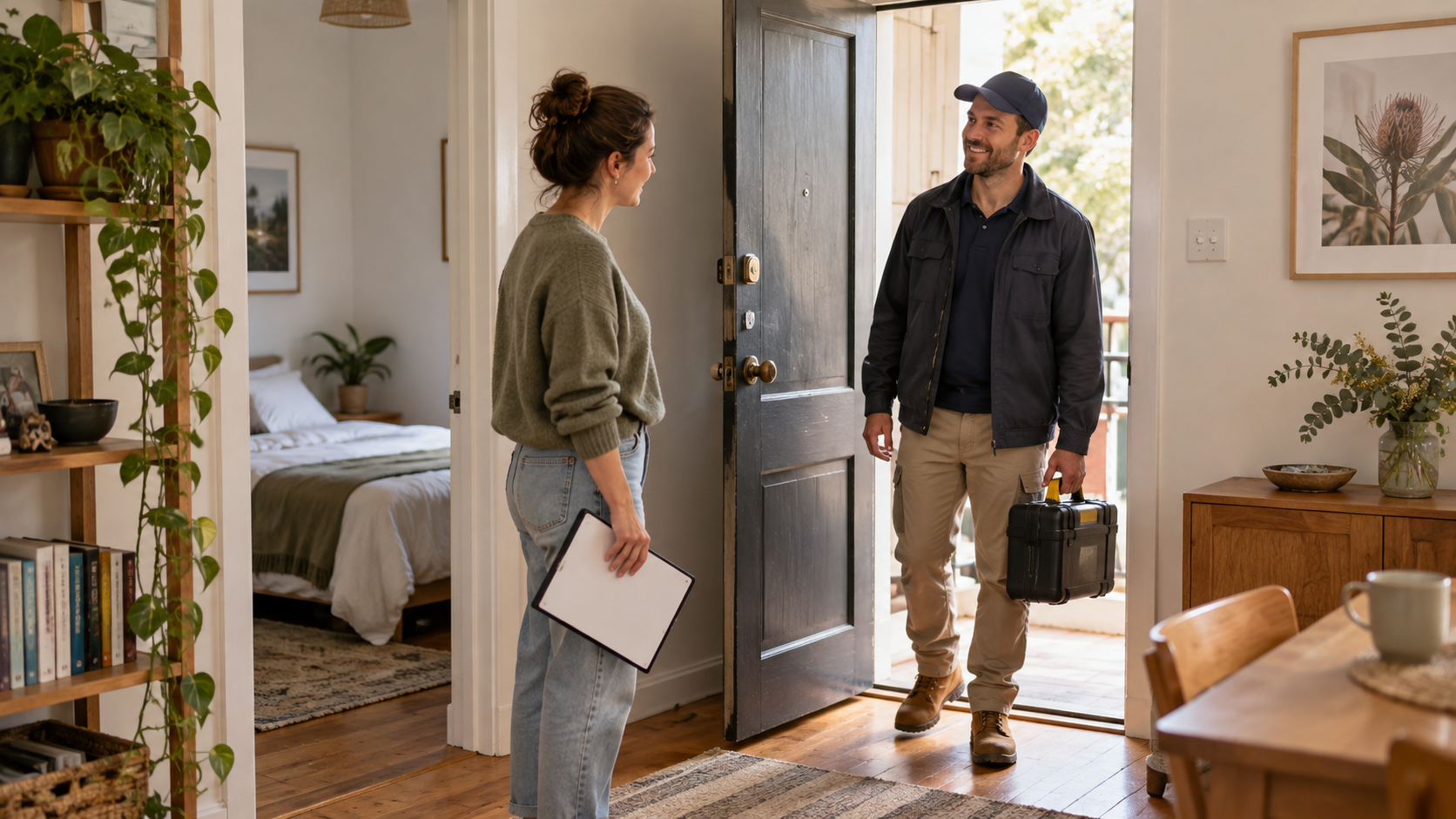
The short answer: entry rules depend on the reason and the state
There is no single national notice period for every rental entry in Australia.
A routine inspection is not the same as an emergency
A landlord or property manager may have a lawful reason to enter a rental home, but the notice, timing, frequency and conditions depend on the property jurisdiction and the reason for entry. Routine inspections, necessary repairs, smoke-alarm work, valuations, photography, open homes and emergencies can sit under different rules. Start by naming the reason instead of treating every visit as a generic inspection.
- Identify the reason for entry: inspection, repair, safety work, valuation, sale, advertising or emergency.
- Look up the current rule for the property's state or territory and the type of agreement.
- Check the notice method, minimum period, allowed hours and frequency limit.
- Keep a written record of what was requested, what happened and any repair or privacy issue that followed.
What a useful entry notice should tell you
The clearer the notice, the easier it is to prepare the home and protect everyone’s time.
A useful notice normally identifies the property, the reason for entry, the proposed date and time or time window, and the person or business expected to attend. The exact form and delivery method vary. If the message only says “inspection” without enough detail to understand what is happening, reply in writing and ask for the missing information while checking the official guidance for your jurisdiction.
- Why entry is needed and whether it is a routine check, repair, safety task or showing.
- The date and a specific time or lawful time window.
- Who will attend, including a tradesperson, photographer, valuer or prospective renter where relevant.
- Who to contact if the proposed arrangement conflicts with a serious practical issue or needs clarification.
- A copy saved with your agreement, previous notices and any follow-up messages.
Routine inspections, repairs and open homes are different
The label used in a message should match the work or purpose that will actually happen.
A routine inspection is generally about the condition of the property and whether maintenance issues need attention. A repair visit is about carrying out or assessing work. Showing a property to a buyer or future renter, taking advertising photos and arranging a valuation can have their own limits and privacy considerations. An emergency can be treated differently again. If the stated reason changes after notice is given, record the change and check whether a new notice or agreement is needed.
- Purpose of the entry
- Routine inspection: review condition and identify maintenance
- Repair or safety work: fix or assess a specific problem
- Valuation or sale: obtain a professional valuation or show the property
- Advertising: take photos or video under the applicable privacy rules
- Questions to ask
- What exactly will be inspected, repaired or photographed?
- Who is attending and for how long?
- What notice and frequency limit applies here?
- Can personal belongings or sensitive material be kept out of the frame?
Compare the state rules before you rely on a number
Similar words can hide different timeframes, forms and frequency limits.
State and territory rules are updated at different times, so use this guide as a map to the question—not as a replacement for the current official source. As examples, Queensland uses an Entry notice process for routine inspections and limits how often they occur; Victoria has its own written-notice, timing and inspection-frequency rules; NSW sets written notice and annual limits for inspections; and Western Australia uses a notice range for routine inspections. The exact answer depends on the reason, agreement and jurisdiction.


Privacy and quiet enjoyment still matter
Lawful entry should be carried out with respect for the fact that this is someone’s home.
Tenants should be able to prepare for entry without wondering whether private documents, medication, valuables, children or personal circumstances will be photographed or discussed. Landlords and agents should plan the visit around the stated purpose, limit images to what is necessary and avoid turning a condition check into a judgement about how a person lives. If a photo is needed for advertising, explain the scope and follow the current privacy requirements.
The best inspection record is specific enough to explain the property and restrained enough to respect the home.
If the notice seems wrong or the visit goes badly
A calm written record gives both sides a better chance to correct the problem.
If you think notice is missing, late, too frequent, unclear or for the wrong reason, do not rely on an argument at the door. Save the message, check the official rule and reply in writing with the specific issue. If entry occurs and the person exceeds the stated purpose, records what happened and ask for the next step. Use the state or territory dispute pathway if the issue cannot be resolved directly.
- Save the notice, the agreement, your response and any photographs or repair records that are relevant.
- Write down the date, arrival time, people present, purpose stated and what actually happened.
- Ask for the issue to be corrected and keep the request factual rather than personal.
- Contact the official rental authority, tenancy advice service or dispute body for the property jurisdiction if needed.
A better inspection routine for landlords and renters
The visit works best when the reason, record and next step are visible to everyone.
Landlords and property managers can make entry easier by using the correct notice, offering a realistic time, naming the attendees, keeping the visit to its purpose and sending a short written follow-up with repairs or actions. Renters can prepare questions, note issues, keep copies and respond promptly where access is lawful. A shared record reduces repeated calls and makes the next decision easier.
- Notice: reason, date, time, attendees and lawful delivery method.
- Visit: stay within purpose, respect privacy and record visible issues accurately.
- Follow-up: repairs, owner decisions, access requirements and the next date are written down.