
The Australian Rental Inspection Checklist: What to Check Before You Apply
A practical Australian rental inspection checklist for comparing homes before you apply. Check condition, costs, privacy, questions, evidence and next steps without guessing what a short inspection tells you.

Start with fit, not finishes
A polished room is only one part of whether a rental will work for your life.
A rental inspection is a short window into a much bigger decision. Look past the cushions and fresh paint and ask a more useful question: could this home support the way I actually live? Think about your commute, household, routines, budget, belongings, privacy and the practical work of moving in.
- Write down your three non-negotiables before the inspection.
- Separate must-haves from preferences so a beautiful finish does not hide a practical problem.
- Plan to leave with a short list of facts, follow-up questions and anything that needs written confirmation.
Read the home room by room
Move slowly enough to notice condition, function and signs that need a follow-up question.
Walk through the property in a consistent order. A room-by-room pass makes it easier to compare homes later and reduces the chance that excitement about the living room makes you forget the bathroom, storage, entry or outdoor areas. You are not expected to perform a building inspection, but you can notice visible issues and ask who will address them.
- Entry: check the door, visible locks, lighting, access path, intercom and the space available for deliveries or prams.
- Living areas: look for visible marks, damp smells, mould, cracked surfaces, window condition, natural light and usable power points.
- Bedrooms: check storage, ventilation, window coverings, privacy, room shape and whether your furniture would fit without blocking access.
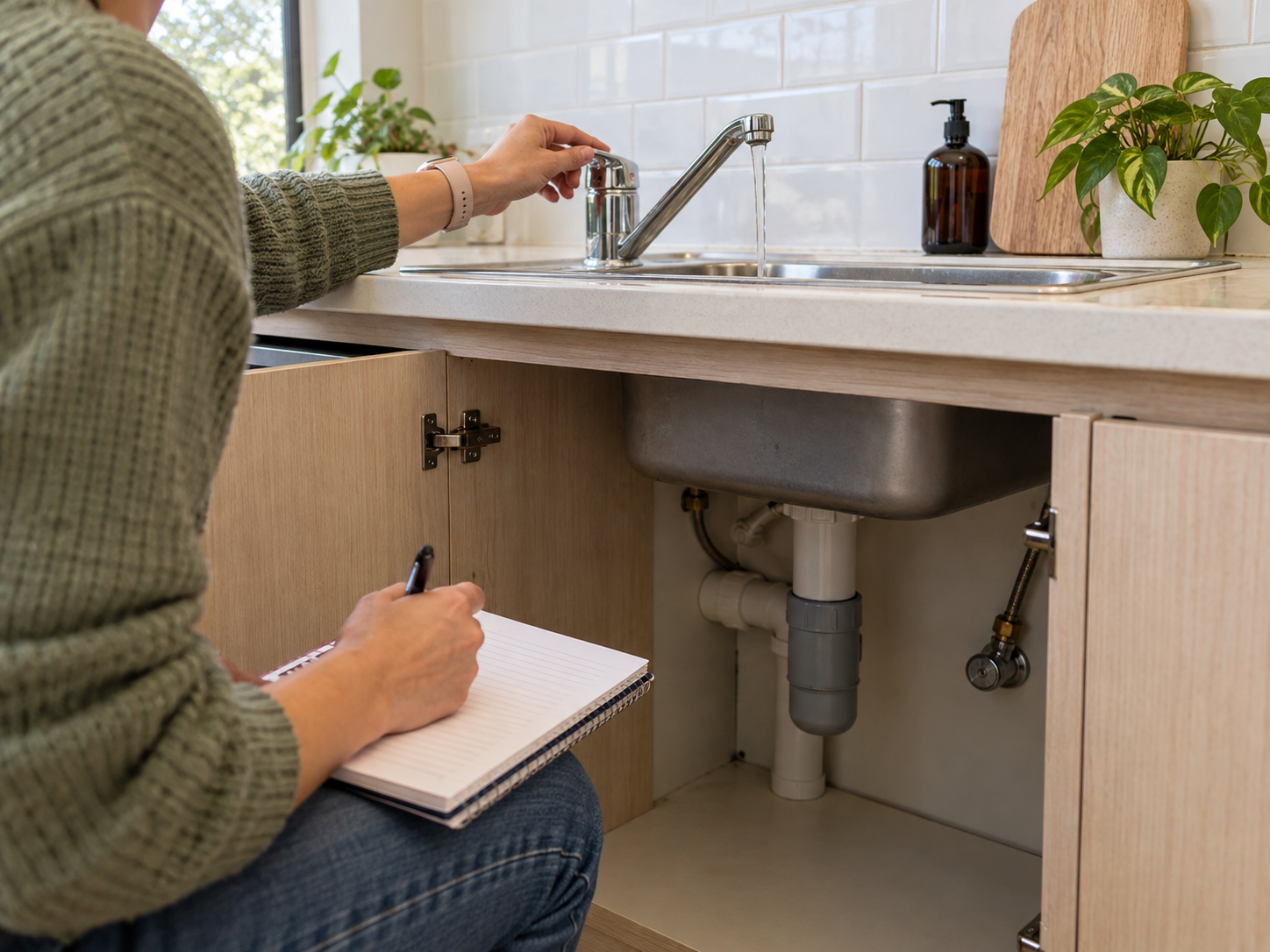
- Kitchen and bathrooms: look at taps, sinks, seals, exhaust fans, cabinetry, appliances and any visible signs of leaks or water damage.
- Outdoor and shared areas: check parking, storage, bins, balconies, stairs, lifts, gardens, laundry access and any building or house rules you will need to follow.
Test the everyday details people miss
The things that shape daily comfort are often less photogenic than the main rooms.
A listing can show you where a sofa goes without telling you how the home feels at 7am, how much noise reaches the bedroom or whether a phone signal works in the study. Pay attention to the ordinary details that affect your routine. Do not force a fitting, switch, window or appliance; ask the rental provider or agent what can be demonstrated safely.
- Water: ask about hot water, water pressure and any known leaks or planned plumbing work.
- Climate control: ask what heating or cooling is installed, which rooms it serves and how it is operated.
- Noise and light: notice traffic, neighbours, lifts, shared walls, street lighting and the direction of the main windows.
- Connectivity: if internet or mobile coverage matters for work, study or health, plan to verify it separately rather than assuming.
- Storage and access: check cupboards, bike space, bins, parking dimensions, stairs, lifts and the path from the car to the front door.
Work out the real cost
Weekly rent is the headline number, not always the whole housing budget.
Before you apply, map the cost of the home across the first week, the first month and an ordinary month after that. Ask which services are included, which are separately metered, and whether any optional feature has a separate charge. The exact amounts, permitted fees and payment rules can vary by state or territory, so confirm them with the relevant official authority and the proposed agreement.

- Weekly rent: record the advertised amount and check whether the proposed agreement matches it.
- Upfront money: ask for a written breakdown of bond, rent in advance and any other requested payment before you send money.
- Recurring services: clarify electricity, gas, water, internet, parking, storage, gardening and any shared-house arrangements.
- Set-up costs: allow for moving, connection fees, furniture, cleaning supplies and small items the home does not provide.
- Timing: check the proposed start date, lease term, availability and what happens if your current housing dates do not line up.
Ask direct questions before you apply
Good questions are specific, easy to answer and tied to a decision you need to make.
You do not need to ask every possible question at the inspection. Prioritise the facts that could change whether you apply or how you budget. If someone does not know an answer, ask when and how it will be confirmed. Keep important promises and repairs in writing.
- What is included with the property: appliances, furniture, parking, storage, garden care or shared utilities?
- Are any repairs, cleaning or replacements planned before the proposed move-in date?
- Are there body corporate, building, house or occupancy rules that affect pets, parking, guests, noise or use of shared areas?
- What is the application process, what information is genuinely needed and when should an applicant expect an update?
- Who arranges and pays each utility, and are any services shared or charged through another person?
- Who is the correct contact for repairs or urgent problems once the tenancy begins?
The most useful inspection question is the one that turns an assumption into a fact.
Keep a clean, respectful record
A few organised notes now can save time when you compare properties or move in later.
Keep the listing, messages, proposed agreement and your inspection notes together. If photography is allowed, capture only the property condition you need to remember; do not photograph personal documents, private belongings or people without permission. Never send identity or financial documents through an unverified link just because a listing feels urgent.
- Save the listing details, inspection date and the name or contact channel of the rental provider or agent.
- Use the same notes for every property so rent, location, condition, costs and unanswered questions are comparable.
- Ask for promised repairs, inclusions or changes to be confirmed in writing before you rely on them.
- When you are offered the entry or condition report, read it carefully, add accurate comments and keep your copy. The exact form and return timeframe depend on your jurisdiction.
- Before signing or paying, check the current official rental guidance for your state or territory, including the correct bond and tenancy information channels.
Do not over-read a 15-minute inspection
Some important facts cannot be established from one visit in daylight.
An inspection gives you observations, not certainty. A quiet Saturday afternoon does not prove the home is quiet on a weekday morning. A strong phone signal at the window does not prove the study will work for video calls. A clean wall does not tell you the history of moisture, repairs or repainting. The goal is not to eliminate every unknown; it is to identify the unknowns that deserve a clear answer before you commit.
- Noise: ask about nearby construction, neighbours, traffic, shared walls and building works.
- Weather: ask whether the home has known damp, mould, drainage or temperature issues that are not obvious on the day.
- Maintenance: ask what is currently being repaired, what has been reported and who will follow up.
- Access: ask how keys, deliveries, parking, bins and shared facilities work in practice.
- Paperwork: ask for the proposed agreement and relevant rules early enough to read them properly.
Use a simple decision test
A clear next step is better than applying because the property looked good for a few minutes.
After the inspection, sort your notes into three columns: comfortable to proceed, needs verification, and not suitable for your needs. This keeps one exciting feature from outweighing several unresolved issues. If you do apply, keep the same checklist beside the proposed agreement so you can check that the home, price, inclusions and timing still match what you understood.
- Proceed: the home fits your must-haves, the costs are workable and the key facts are clear.
- Verify: a repair, inclusion, rule, service or payment detail could change your decision and needs a written answer.
- Pause: the property, process or payment request creates a concern you cannot resolve through reliable information.
- Compare the home against your must-haves, not just the listing photos.
- Write down the full expected cost and every unanswered question.
- Read the proposed agreement and relevant official guidance for the property's state or territory.
- Keep your application information limited to what is needed and submit it through a verified channel.
- Keep the listing, messages, written answers and move-in condition records together.
RENTSEEKR CITY · LOCAL DISCOVERY
Looking for useful help in your area?
Choose a published City market and optional suburb or postcode to see active, approved services listed for that area. This article does not determine your location.
Choose a published City market; no location is inferred from this article.