
How RentSeekr Helps Landlords and Tenants Stay on the Same Page
A practical guide to clearer rental communication, shared property records, repair follow-up, lawful access and fewer avoidable misunderstandings for Australian landlords and tenants.
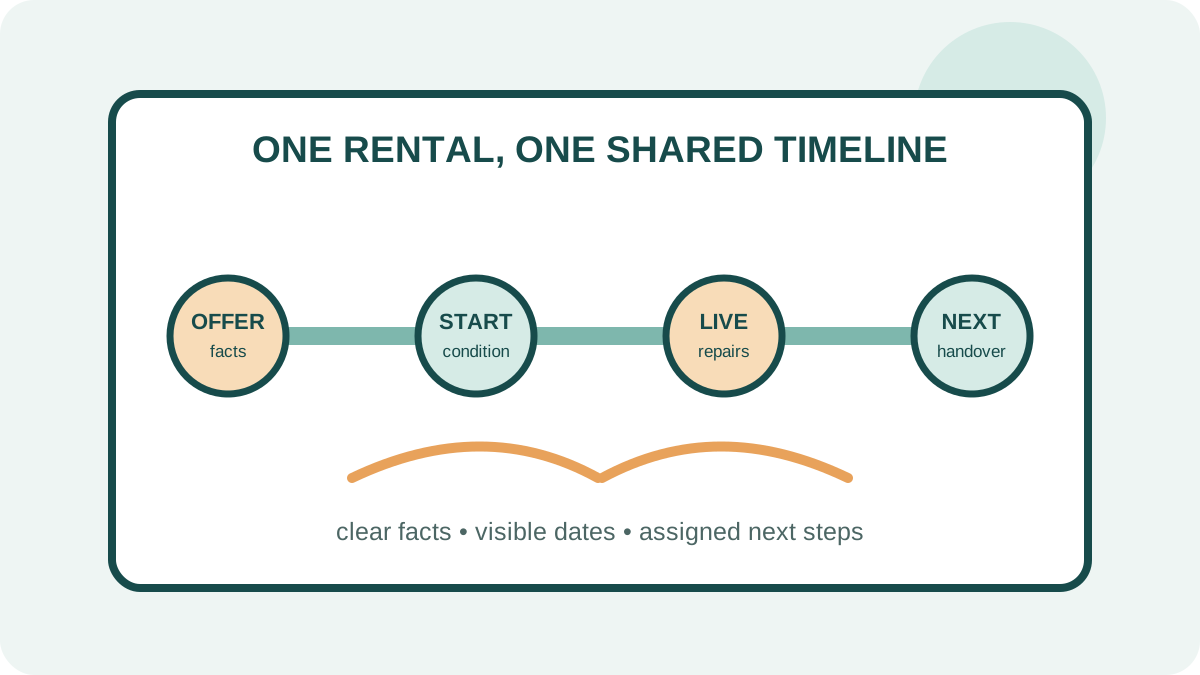
What staying on the same page really means
It is not about agreeing on everything. It is about being able to find the same facts, dates and decisions.
A rental has two perspectives. A landlord or property manager is coordinating a property, money, safety, trades and legal duties. A tenant is living in the home, reporting issues, planning around access and relying on the property to remain usable. Friction starts when an advertised inclusion, condition note, repair request, inspection time or agreed change exists only in one person’s inbox or memory.
Staying on the same page does not mean RentSeekr decides who is right, replaces a tenancy agreement or overrides a state or territory rule. It means the people involved can work from a clearer shared record: the property facts, the documents, the conversation, the current status and the next action.
Start with one accurate property record
The relationship is easier when the offer is precise before anyone relies on it.
The first shared page is the property itself. Rent, availability, inclusions, access arrangements, parking, storage, utilities, pets, shared areas and known constraints should be described consistently across the listing, application conversation and agreement. If a material fact changes, update the record and tell the people who may rely on it.
Make the tenancy start unambiguous
A good start reduces the number of small disputes that grow later.
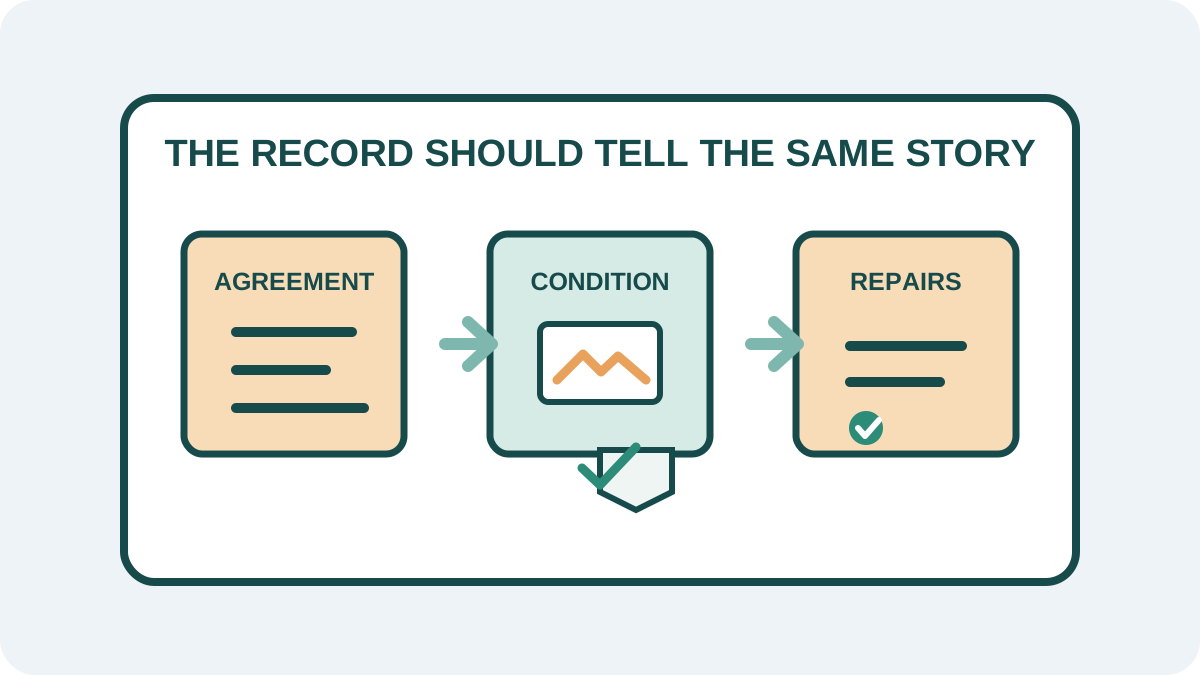
At the start, make the agreement, bond process, rent method, emergency contact, access arrangements, supplied items and condition-report process easy to locate. The exact form, deadline and required information depend on the jurisdiction. Both sides should receive the documents they are entitled to receive and keep their own copy.
- Confirm the accepted offer matches the agreement and identify any approved special terms.
- Complete the entry condition report carefully, with dated photographs where appropriate.
- Record keys, remotes, meters, appliances, manuals and existing marks.
- Write down who handles urgent repairs, routine repairs, notices and after-hours issues.
- Give both sides a clear place to find the final documents and later updates.
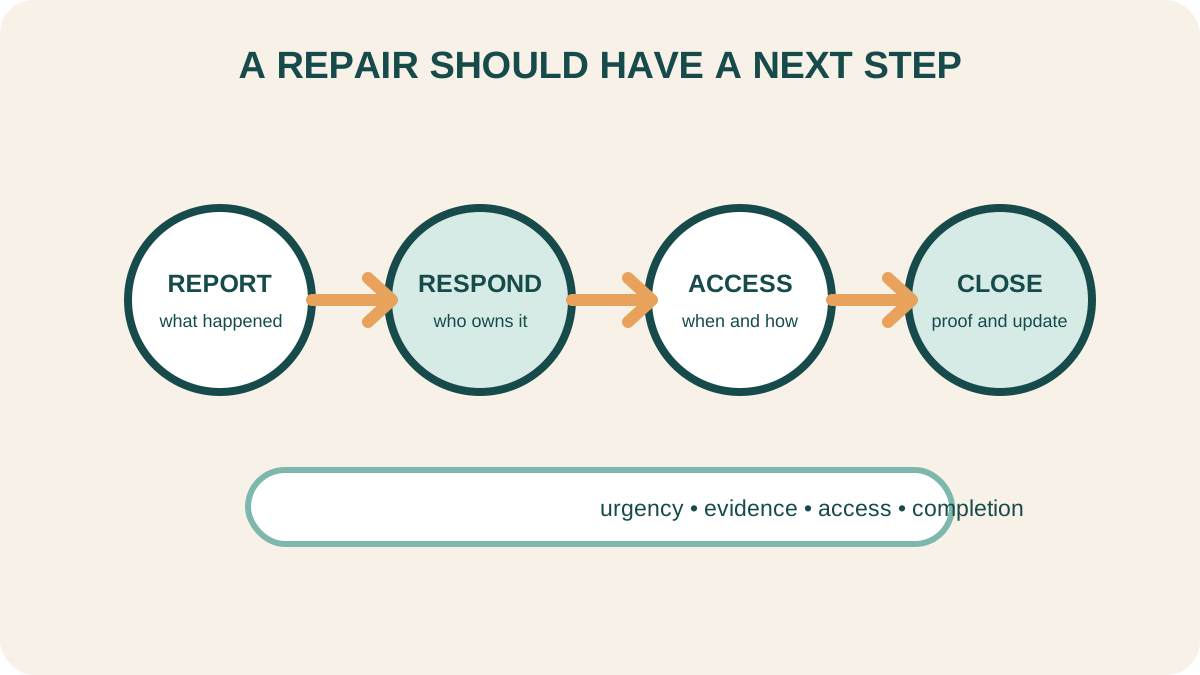
Turn every repair into a clear loop
A repair update should answer what happened, how urgent it is, who is acting and what happens next.
For tenants, report the problem in writing with the location, symptoms, photos where safe, when it started and whether there is an immediate safety or habitability risk. For landlords and managers, acknowledge the report, assess urgency, explain the next step, arrange lawful access and close the loop with the outcome. If a trade is delayed, say so and provide the next update rather than letting silence become the status.
Make access and inspections predictable
Notice and entry rules are not just legal details; they are the practical boundary that protects the home and the property.
A landlord or agent should state the reason for access, use the required notice and timing, and tell the tenant what will happen during the visit. A tenant should respond promptly, raise a genuine scheduling problem early and keep a copy of the notice. The right to enter, notice period, frequency, emergency exception and final-inspection process vary by state or territory.
Record changes before they become arguments
A short written confirmation can protect a relationship without turning every conversation into a contract dispute.
Rent, occupants, pets, inclusions, access arrangements, repair scope and move-out dates can change during a tenancy. Some changes need formal consent, a prescribed form, a variation, disclosure or a new agreement; a chat message alone may not be enough. Use RentSeekr to keep the conversation and next action visible, then complete the formal step required by the jurisdiction.
- Describe the requested change in plain language.
- Identify who must approve it and whether the state or territory requires a particular form or notice.
- Write down the effective date and any conditions or follow-up.
- Give every affected party the final version and retain the earlier record.
- Update the task status when the change is completed, declined or no longer needed.
When you still disagree
A shared record is useful even when it does not produce agreement.
Start with the specific issue: what was agreed, what happened, what evidence exists and what outcome is being requested. Keep the tone factual and give the other person a reasonable opportunity to respond. If the issue remains unresolved, use the official tenancy authority, dispute resolution service, community legal centre, tenants’ advice service or tribunal available in the relevant jurisdiction. Do not retaliate, threaten, publish private information or take a shortcut that could breach the agreement or the law.
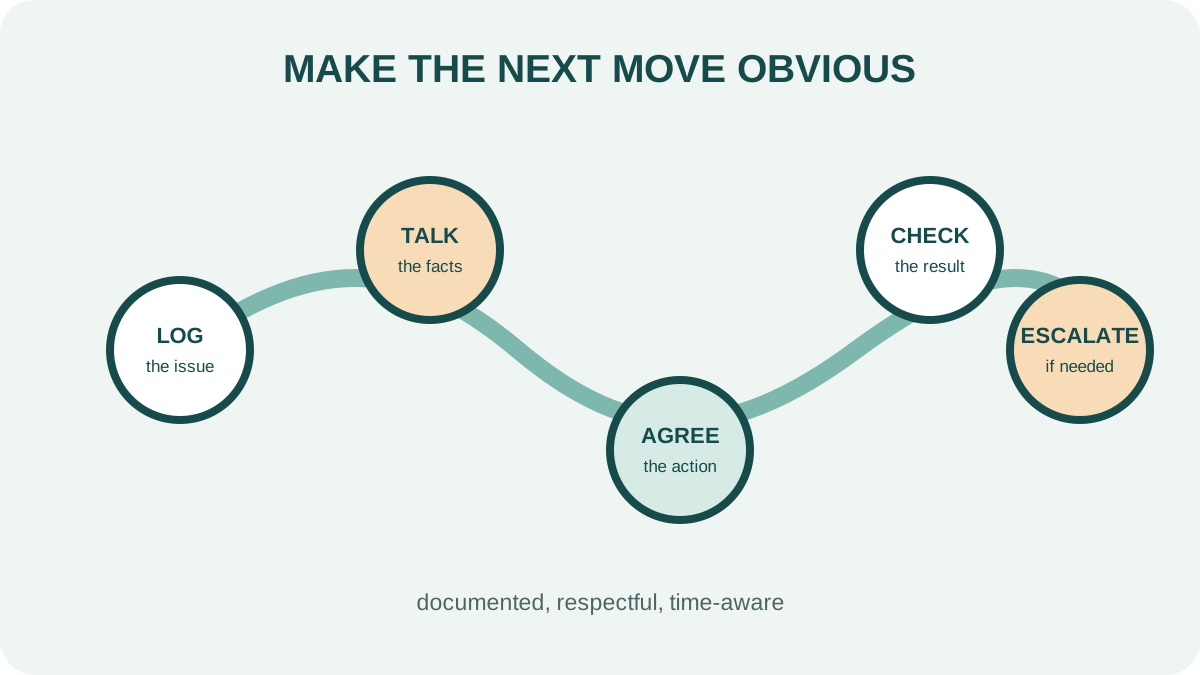
The RentSeekr same-page workflow
Use the platform to reduce avoidable ambiguity while leaving legal decisions with the people and authorities responsible for them.
- Create or confirm the property record and make the offer clear.
- Share the relevant agreement, condition evidence and contact pathway.
- Capture each repair or request with urgency, evidence, owner and next update.
- Keep access, inspection and handover records connected to the property timeline.
- Confirm changes in writing and retain the final version.
- If there is a dispute, export the facts you need and use the correct state or territory process.
Bring property facts, documents, condition evidence, repair updates and next steps into a more organised rental experience with RentSeekr.
Explore RentSeekr featuresRENTSEEKR CITY · LOCAL DISCOVERY
Looking for useful help in your area?
Choose a published City market and optional suburb or postcode to see active, approved services listed for that area. This article does not determine your location.
Choose a published City market; no location is inferred from this article.